
The Rise of the Industrial Metaverse: Redefining the Future of Manufacturing and Operations

Introduction
The industrial landscape is entering a new era of transformation — one that goes beyond automation, robotics, and data analytics. This evolution is being shaped by the Industrial Metaverse, a convergence of immersive technologies, artificial intelligence, and real-time data systems. Unlike traditional Industry 4.0 concepts focused on digitalization, the Industrial Metaverse represents a fully interconnected ecosystem where physical and virtual worlds seamlessly blend. It’s not a concept for the future — it’s the strategic frontier reshaping how industries operate today.
Understanding the Industrial Metaverse
A New Layer of Industrial Reality
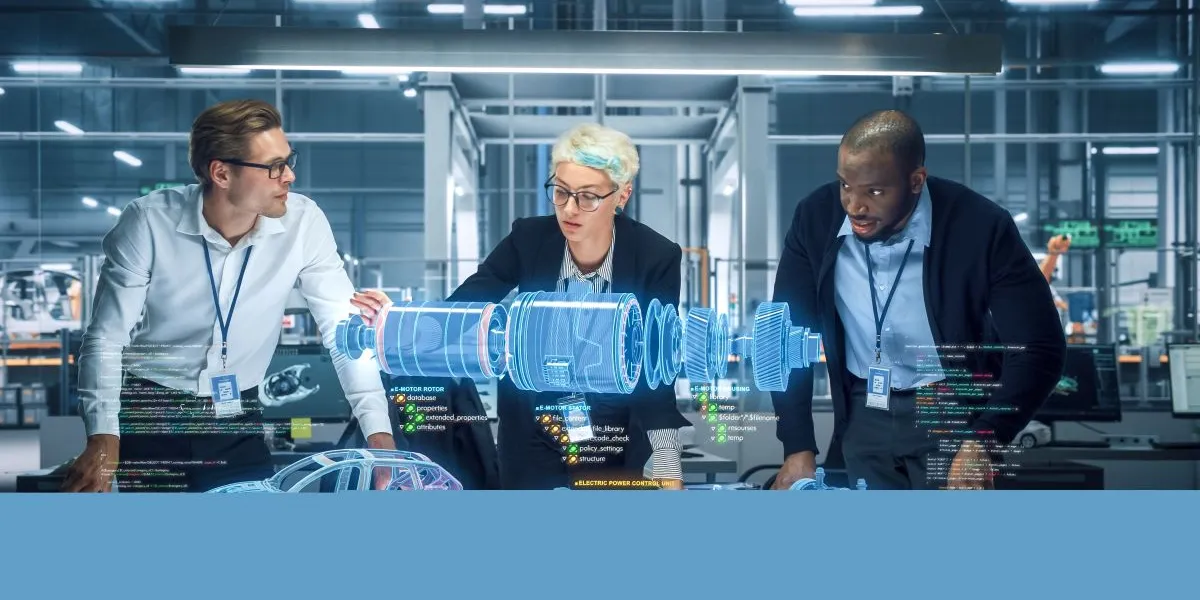
The Industrial Metaverse is an immersive, digital environment designed to mirror and enhance real-world industrial systems. It enables manufacturers, engineers, and operators to interact with digital twins — real-time virtual replicas of machines, factories, and supply chains — in 3D spaces using extended reality (XR) interfaces. These environments are not static models but dynamic, data-driven ecosystems continuously updated with live information from sensors, edge devices, and cloud platforms.
The Strategic Shift
Unlike early digital transformation phases that merely digitized manual processes, the Industrial Metaverse fosters predictive and collaborative intelligence. It allows enterprises to visualize, simulate, and optimize entire production workflows before physical implementation. The result is enhanced operational agility, reduced downtime, and a more sustainable approach to resource utilization.
Key Pillars of the Industrial Metaverse
1. Digital Twins at Scale
Digital twins are the core of the Industrial Metaverse. They provide an exact digital replica of equipment, factories, and even entire supply chains. However, the next evolution lies in networked twins — interconnected models that communicate with each other, enabling holistic simulation and decision-making.
Key benefits include:
-
Real-time synchronization between virtual and physical assets.
-
Predictive maintenance through AI-driven diagnostics.
-
Continuous process improvement via scenario-based simulations.
-
Remote monitoring and troubleshooting using immersive 3D visualization.
2. Extended Reality (XR) Interfaces
Extended Reality — encompassing AR, VR, and MR — transforms how industrial workers engage with machinery and data. Technicians can view real-time performance metrics through AR glasses, collaborate with remote experts in shared virtual spaces, and even train in hyper-realistic simulations without interrupting live operations.
Applications include:
-
Virtual assembly line design and testing.
-
Remote collaboration for equipment maintenance.
-
Interactive workforce training and certification programs.
-
Safety simulations for high-risk environments.
3. Edge Computing and IIoT Integration
The Industrial Metaverse relies on low-latency data flow. This is achieved through the integration of the Industrial Internet of Things (IIoT) and edge computing. Edge devices capture and process data locally, ensuring near-instant responses for time-critical operations. When combined with AI, this creates a decentralized intelligence system capable of autonomous decision-making at every level of production.
4. Artificial Intelligence and Machine Learning
AI acts as the cognitive layer of the Industrial Metaverse. It processes vast streams of real-time data, predicts anomalies, and optimizes operational performance. From generative design in product development to real-time process optimization in manufacturing, AI enables smarter, faster, and more adaptive industrial ecosystems.
Key AI-driven advancements include:
-
Self-learning production lines.
-
Automated supply chain forecasting.
-
Cognitive digital assistants for maintenance.
-
Generative algorithms for process re-engineering.
5. Cybersecurity and Data Governance
As industries become increasingly interconnected, data integrity and cybersecurity become paramount. The Industrial Metaverse demands advanced protection frameworks to safeguard digital assets and proprietary data. Encryption, zero-trust architectures, and blockchain-based traceability are critical to maintaining secure operations across virtual-physical boundaries.
Strategic Benefits for Modern Industries
Enhanced Operational Efficiency
The integration of digital twins and AI-driven analytics enables industries to achieve precision-driven operations. By simulating every variable in a virtual space, manufacturers can identify bottlenecks, reduce waste, and optimize workflows before execution.
Improved Workforce Empowerment
The Industrial Metaverse augments human capabilities rather than replacing them. With immersive training, guided maintenance through AR, and collaborative digital environments, employees are empowered to perform complex tasks more accurately and safely.
Predictive Maintenance and Reduced Downtime
Through real-time data and AI algorithms, the system can predict potential failures before they occur. This predictive approach significantly reduces unplanned downtime, extends asset lifespan, and enhances reliability.
Sustainable Industrial Practices
Sustainability is becoming a central industrial KPI. The Industrial Metaverse enables resource optimization, energy efficiency, and carbon footprint reduction through real-time tracking and simulation of sustainable production scenarios.
Implementation Challenges and Solutions
Integration Complexity
Merging legacy systems with cutting-edge metaverse technologies is one of the biggest hurdles. Adopting open data standards and interoperable architectures is essential for seamless integration.
High Initial Investment
The cost of XR devices, sensors, and edge infrastructure can be substantial. However, long-term ROI is realized through efficiency gains, reduced downtime, and innovation-driven competitiveness.
Data Privacy Concerns
Data flows freely across virtual and physical spaces, creating potential vulnerabilities. Building a robust governance model with multi-layered security protocols mitigates these risks effectively.
Workforce Adaptation
Introducing immersive technologies requires cultural adaptation. Continuous upskilling, change management, and leadership involvement are vital for ensuring successful adoption.
The Future Outlook
The Industrial Metaverse represents the next evolution beyond Industry 4.0 — often referred to as Industry 5.0 — where the synergy between human intelligence and machine precision takes center stage. The upcoming decade will see:
-
Full-scale digital twin ecosystems across global supply chains.
-
Real-time collaboration between factories located continents apart.
-
Integration of sustainable production frameworks into immersive digital models.
-
AI-driven orchestration of entire industrial ecosystems.
Forward-thinking enterprises that invest now in building metaverse-ready infrastructures will be the ones to lead the next industrial revolution.
Conclusion
The Industrial Metaverse isn’t just a technological evolution — it’s a strategic shift toward connected intelligence, human-centric design, and operational resilience. It bridges the gap between digital and physical realities, empowering industries to simulate, predict, and optimize with unprecedented precision. As organizations continue to embrace this transformation, those who align technology, people, and purpose will emerge as the leaders of the next industrial era.
FAQs
1. How is the Industrial Metaverse different from Industry 4.0?
While Industry 4.0 focuses on automation and digitalization, the Industrial Metaverse emphasizes immersive interaction, real-time collaboration, and interconnected digital twins across entire ecosystems.
2. What role does AI play in the Industrial Metaverse?
AI enables predictive maintenance, autonomous optimization, and intelligent data analysis, allowing industries to anticipate problems and optimize performance proactively.
3. Can small and medium-sized enterprises (SMEs) benefit from the Industrial Metaverse?
Yes, scalable cloud-based platforms and modular XR solutions are making Industrial Metaverse technologies accessible even to smaller manufacturers.
4. What industries are leading the adoption of the Industrial Metaverse?
Manufacturing, automotive, energy, and logistics sectors are among the early adopters due to their reliance on complex operational systems and data-driven decision-making.
5. How does the Industrial Metaverse enhance sustainability?
It allows companies to simulate resource consumption, optimize production efficiency, and reduce carbon emissions through virtual testing and analytics.
6. What are the main risks associated with implementing the Industrial Metaverse?
The primary risks include cybersecurity vulnerabilities, high implementation costs, and resistance to technological change within the workforce.
7. What skills will the workforce need in the era of the Industrial Metaverse?
Employees will need proficiency in data analytics, digital twin management, AR/VR operation, and interdisciplinary collaboration to thrive in metaverse-driven environments.
Comments are closed.